Toddler Fine Motor Development: Play-Based Activities for Ages 1–4 (Easy At-Home Guide)
Fine motor skills grow through everyday play—pinching, grasping, stacking, and turning. With a few simple materials and short, upbeat routines, toddlers can build hand strength, coordination, and early pre-writing skills without formal drills. Use the age ideas below as a flexible menu, following the child’s interest and keeping activities quick, safe, and fun.
What fine motor skills look like from ages 1–4
Fine motor development is often “two steps forward, one step back.” Repetition matters, and it’s common to see a sudden leap after weeks of the same simple play.
- Ages 1–2: whole-hand grasp, releasing objects into containers, basic finger isolation begins, simple stacking and turning pages
- Ages 2–3: improved pincer grasp, stringing large beads, snipping with child-safe scissors (with support), simple tool use (tongs, scoopers)
- Ages 3–4: controlled drawing strokes, buttoning attempts, turning small knobs, more precise placement (puzzles, pegboards)
- Remember: progress is uneven; bursts of improvement often follow weeks of repetition and play
Quick milestones & playful practice ideas
| Age range |
Common skills emerging |
Play-based activity |
| 1–2 |
Drop, release, bang, simple stack |
“Drop & discover”: post pom-poms into a container with a slot cut in the lid (supervised) |
| 2–3 |
Pinch, scoop, begin to cut and string |
“Rescue with tongs”: move cotton balls between bowls using toddler tongs |
| 3–4 |
Draw shapes, fasten, build with precision |
“Sticker paths”: trace a road with stickers, then draw lines to connect them |
Set up for success: materials, safety, and toddler-friendly pacing
- Start big, then size down: use large, easy-to-grip items first (big crayons, chunky beads) and move smaller only when ready.
- Keep it short: aim for 5–10 minutes per activity; stop while interest is still high.
- Change one variable: choose one challenge at a time (either new materials or a new skill, not both).
- Supervise closely: small items can be choking hazards; choose non-toxic art supplies and avoid anything that can splinter.
- Make it predictable: a small “hands time” bin that comes out at the same time each day reduces resistance and helps toddlers jump in faster.
For developmental reference points, check trusted milestone resources like CDC Developmental Milestones and the American Academy of Pediatrics milestone guidance.
Play-based activities that build fine motor skills (no special equipment)
These are simple, repeatable activities that strengthen hands and practice control. Rotate them so your toddler gets a mix of pinching, grasping, stabilizing, and coordinating with both hands.
- Playdough pinch-and-pull: roll “snakes,” pinch “peas,” and hide larger small toys to dig out using fingers.
- Sponge squeeze station: transfer water between cups with a sponge to build grip strength (towel underneath).
- Painter’s tape peel-and-stick: place tape strips on a wall or tray; peel and stick onto paper to make roads.
- Sticker sorting: match sticker colors to drawn circles; practice precise placement with “one sticker at a time.”
- Cotton swab dot art: dip into washable paint and make dot patterns, simple shapes, or early letter-like lines.
- Pipe cleaner threading: thread into a colander or large-holed strainer (supervised).
- Clothespin pick-up: clip clothespins onto a box rim, then remove and drop into a container.
- Kitchen helper tasks: tearing lettuce, stirring thick batter, peeling mandarins, opening and closing zip bags.
Age-by-age activity menu (choose 2–3 per week)
Pick a few activities weekly and repeat them. Familiar tasks free up attention for better control and longer focus.
- Ages 1–2: container play (in/out), stacking cups, posting large pieces, chunky puzzles, finger painting in a zip bag.
- Ages 2–3: tong transfers, bead stringing (large), playdough tool play (rollers, blunt cutters), simple lacing cards.
- Ages 3–4: scissor lines on thick paper, basic tracing with short strokes, simple origami folds with help, practice fasteners on dress-up clothing.
Rotation tip: aim to include each category over time—pinch (small picks), grasp (tools), stabilize (one hand holds while the other works), and coordinate (both hands together).
Turn daily routines into fine motor practice
Hands get stronger when toddlers use them all day. These everyday moments often work better than “sit down and practice” time.
When to increase difficulty (and when to simplify)
If you want another reputable overview of early childhood development (including ages 1 to 5), see the NHS child development guidance.
Printable support: guided play plans and skill tracking
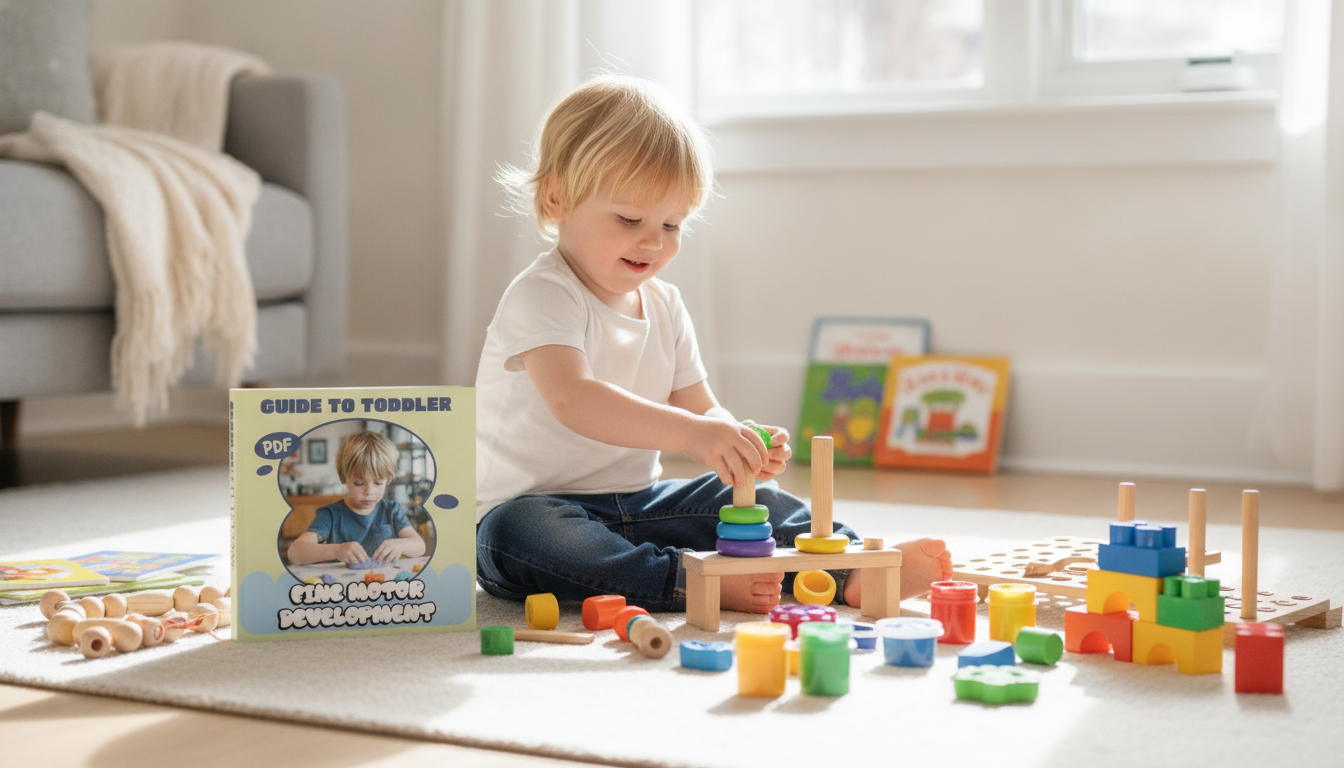
For an organized set of play ideas aligned to ages 1–4, use: A Fun Guide to Toddler Fine Motor Development – Play-Based Activities & Fine Motor Skills for Toddlers | Easy At-Home Guide for Ages 1–4.
FAQ
How often should toddlers practice fine motor activities?
Short daily play bursts (about 5–10 minutes) work well, or a few sessions per week if days are busy. Variety and following interest matter more than long practice sessions.
What are easy fine motor activities using things already at home?
Try tape peeling, playdough pinching, sponge squeeze water transfer, clothespin clip-and-drop, sticker matching, container “posting,” spoon or cup transfers, and simple lacing with a shoelace and large holes.
When should a parent ask a pediatrician or occupational therapist about fine motor concerns?
Reach out if there’s persistent difficulty using hands compared to peers, a loss of previously gained skills, extreme avoidance of hand play, or ongoing trouble with basic grasp/release skills beyond typical expectations. A pediatrician or occupational therapist can offer individualized guidance and reassurance.
Recommended for you













Leave a comment